
Hospitals can’t improve what they can’t see.
Nightingale OS automates the work of organizing hospital quality findings, evidence and follow-through, giving teams more time to improve care. Built by a nurse who spent twenty years watching good people fight the same quality problems with too little time and too little usable evidence.
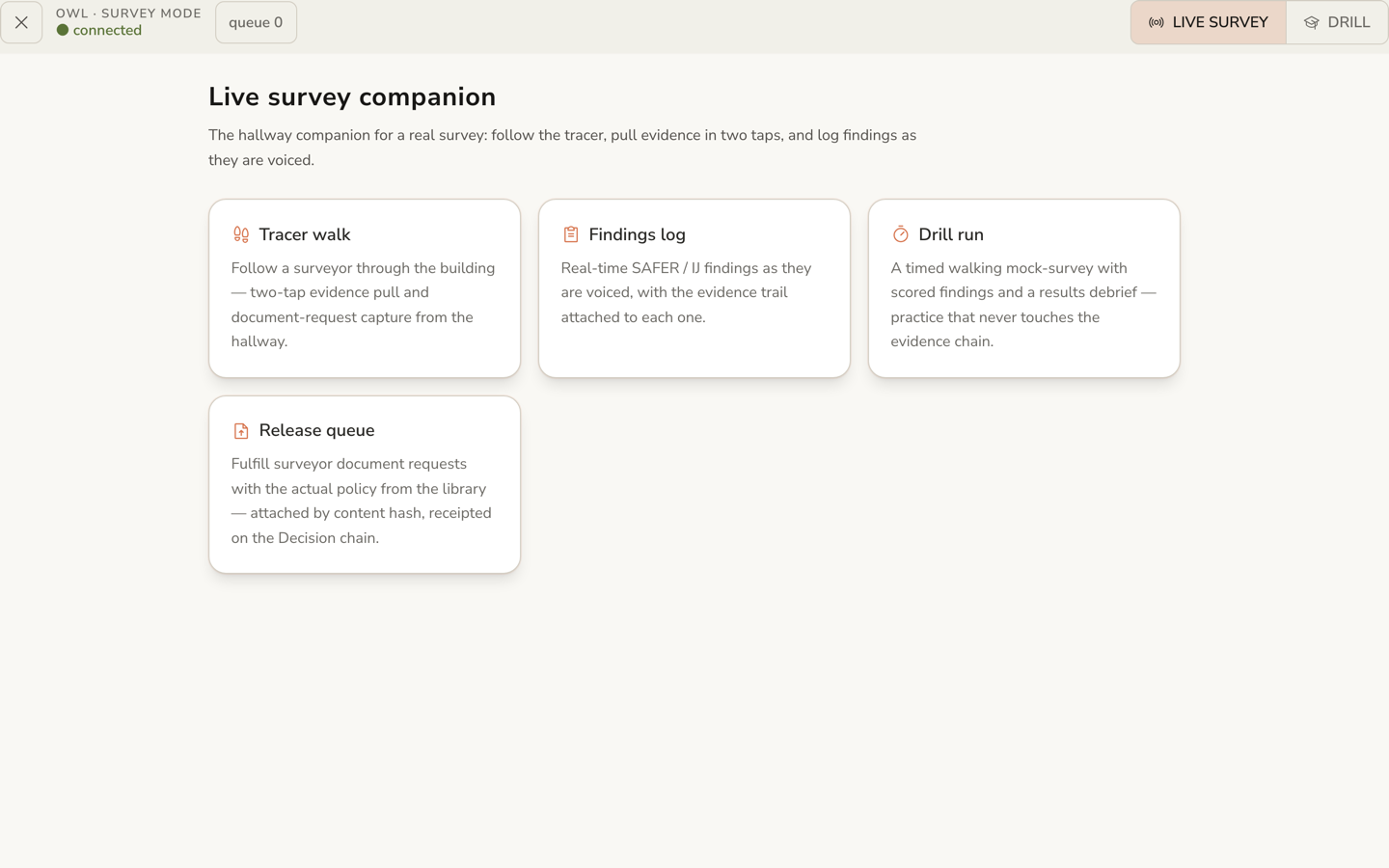

Charlie Owl, the first app: the live survey companion. Real software, synthetic data.
Quality protects patients, and a hospital’s
ability to keep caring for them.
Finding the evidence still means digging through charts and disconnected programs. Quality teams spend scarce time reconstructing what happened, with too little capacity left to evaluate whether a change worked. Too much time goes into gathering evidence. Too little is left to act on it.
“For twenty years I watched good people fight the same quality problems with too little time and too little usable evidence.”
Owl takes quality work from finding a gap
to tracking what changed.
Owl automatically pulls open survey findings, surveyor document requests, designation criteria and quality-measure submissions into one queue, so no one rebuilds the list by hand. Then one loop: assign an owner and a due date, attach the evidence, and leadership sees what changed.
The roster in honest tiers: 44 regulatory, 39 certification, 35 accreditation and 32 voluntary-excellence programs, plus a 52-jurisdiction scope-of-practice matrix (50 states, DC and Puerto Rico). Breadth is never dressed up as depth.
Survey day, on synthetic data
A surveyor asks for QAPI minutes. Owl flags them privilege-sensitive, holds the release, says why, and logs it. The hospital’s rules decide what the surveyor gets. That is the compiler’s design rule at work.
Who covers survey readiness today
Tracers with AMP, Vastian, Ideagen, RLDatix and in-house Epic workflows each cover part of survey readiness. Owl tracks 150 programs, 50 modeled end to end, and is designed to run on site, on Grace.
Owl is built and testable on synthetic data; Grace is in design. Live demo on request.
I started by automating quality work.
Fixing quality meant connecting the hospital.
One quality problem crosses the whole hospital: the evidence lives in one system, the people who fix it in another, and leadership sees a third. Owl is the first deployment. The shared platform enables expansion: Nightingale combines quality evidence and follow-through with agent permissions, recorded actions and human accountability, building toward governed automation across hospital systems.
Charlie Owl · prototype running
Our first app. Quality findings, evidence, ownership and follow-through in one workflow. Working prototype on synthetic data.
Charlie · in build
The shared platform, with AI governance built into the foundation. Shared clinical context and permissions, with recorded agent actions and accountable human owners. Action recording prototyped; controls to block unapproved actions in development.
Grace · planned
Planned on-site inference for hospital-controlled AI, so patient data can stay in the building. Proof of concept running on hardware we control.
Starts with hospital-approved exports
Owl is hosted and starts from hospital-approved exports, with no EHR interface build to begin.
One install, every later app
The same on-premise install carries every app after the first. A hospital adds apps; it never starts over.
Built to the Joint Commission’s responsible-AI standard.
Private by design.
The Joint Commission launched its Responsible Use of AI in Healthcare (RUAIH) certification on June 1, 2026. Owl is built to that standard: it maps a hospital’s AI evidence onto every RUAIH standard area, and it keeps patient data where it belongs.
Built for the Joint Commission’s RUAIH certification
Owl’s RUAIH readiness pack takes the hospital’s live AI evidence, the model inventory, the named human owner for each model, monitoring and bias review, and maps it onto all 5 RUAIH standard areas and the 7 Joint Commission / CHAI guidance elements, so the gaps show before a surveyor finds them. It reports evidence counts, never a readiness score it made up.
RUAIH certifies hospitals, not software; Owl prepares the hospital. Source: server/src/services/owlRuaihReadinessPack.js, verified 2026-11-10.
Privacy-forward, from the first demo
Every demo and the digital pilot run on synthetic patients with zero PHI. Owl starts from exports the hospital approves, with no EHR connection, so the hospital decides what Owl sees. Leadership views are aggregate and name no individual staff. Privilege-sensitive documents are held, and every release is logged. Grace, the on-site server Owl is designed to run on (in design), keeps patient data in the building.
Go deeper: open any section below.
Why It Doesn’t Get Fixed
Hospitals need a way to reduce cost
without reducing the capacity to care.
without reducing the capacity to care.
Which costs can we cut safely?
When budgets tighten, leaders need evidence about which costs can be reduced safely. That evidence is hard to assemble, so they struggle to tell waste from essential care capacity.
The human glue
Nurses own most hospital workflows. Eight: the system failures a nurse works around in an average 8-hour shift (Tucker & Spear, Health Services Research, 2006). Every shift, nurses engineer around failures nobody designed for.
Another lever: evidence, and time back
Nightingale gives hospitals the evidence to see what is working, and gives time back to the clinicians who can act on it.
Why Now
Quality demands are expanding.
Local AI capabilities are advancing.
Local AI capabilities are advancing.
FY2027: more patients count
Medicare’s readmission penalties count Medicare Advantage patients for the first time, starting with the FY2027 program year (CMS FY2026 final rule).
Stronger AI a hospital can control
Open-weight models such as OpenAI’s gpt-oss-120b (August 2025) run on a single 80GB server GPU. Stronger open-weight models make hospital-controlled AI more practical.
What the Broken System Costs
Every gap a nurse bridges by hand
shows up on the hospital’s bill.
shows up on the hospital’s bill.
Medicare pays hospitals on quality now. The infection nobody caught, the readmission nobody prevented and the survey finding nobody saw coming all cost money, year after year. These are the costs Nightingale OS is built to drive down.
A hospital with $100 million a year in Medicare inpatient payments has up to about $6 million a year riding on these programs alone, before a single infection, survey finding, attack or resignation is counted. Illustrative.
Built to Be Trusted
Nurses earned America’s trust.
We built a system that earns the same.
We built a system that earns the same.
Hospital security is patient safety. So Nightingale OS is built around one rule: nothing acts unless it passes the hospital’s own rules. The hospital’s data and its own rules go in; checked, coordinated, recorded actions come out.
The hospital’s rules, enforced
Grace, our clinical compiler, checks every action against the hospital’s own rules before it happens. What makes Grace hard to copy is what it knows and obeys.
Every action on the record
Every refusal and every override is written to a tamper-evident record. A human can override; the override is recorded and the reason cited.
The data stays in the building
Grace runs on site, leased to the hospital, with contacts established with American manufacturers for the hardware we build, to protect the supply chain.
Humans stay in command
Every recommendation shows its basis, so clinicians review it and decide. Built by the profession that carries the accountability. Nurse-owned.
Inside a Nightingale Hospital
Comprehensive compliance is vertical integration.
Hardware, compiler and apps built together, for every department. Compliance in a hospital is not one department’s job: every department is surveyed, and every role is accountable. Others sell a hospital operating platform in software; we build the hardware, the compiler that enforces the hospital’s rules, and the apps together, so the rules hold in every department and are designed to keep holding through an outage. Owl lands it with survey readiness. Beyond Owl, the same install serves every role. Humans stay in command.
The charge nurse
The unit on one screen: what is critical now, what is coming, and who needs support. An unsafe assignment trade is refused, and every reason is cited. A human can override, and the override is recorded.
The CNO and the board
Totals, never names. Every refusal and every override is on the record.
The patient and the family
A companion in their own language, built around the outcomes they choose. Audio stays on hospital systems; Nightingale keeps no recordings.
Owl starts with administrative compliance work. Scoped clinical tools will seek FDA clearance. Every recommendation shows its basis, so clinicians review it and decide.
A Major Attack, Unprotected · Illustrative
Without early containment, hospitals shut systems down,
and patients die.
and patients die.
| When | What happens |
|---|---|
| Hour 0 | Ransomware spreads; no one knows which workstations are infected. |
| Day 1 | Systems shut down to stop the spread. |
| Days 1–17 | The EHR, labs and imaging can go dark; ambulances are diverted. |
| Week 1 | Patient volume down 17–24%. |
| Admitted | In-hospital mortality up 34–38%. |
| After | Reported impact: $67M at UHS, $113M at Scripps. |
And the rules are tightening: the HIPAA Security Rule update is projected for July 2027, and New York’s hospital cybersecurity rule has been mandatory since October 2025.
Grace contains the attack.
Care keeps moving.
Hospital security is patient safety. Grace is designed to contain unsafe endpoints early and keep clinical access up through the disruption and the recovery. Every step below is in design; the prototype this round builds will demonstrate the sequence end to end.
Unsafe workstations isolated at boot
Contain early, without pulling the plug on everything.
One-way optical ports isolate Grace
Hardware-enforced and one-way: the unidirectional-gateway approach described in NIST SP 800-82.
Charlie stays up, read-only
On a rolling four-hour backup kept on Grace, with the age of the data shown.
The bedside keeps working
iOS devices hold new work as pending; when service returns, clinicians approve it and file it.
What the prototype will demonstrate: fail a boot check → isolated → Charlie read-only → work held on iOS → approved and filed.
In phase one, approved work is filed in Nightingale; it is not written back to the EHR until integration at the seed. The goal: fintech-grade security for the critical infrastructure of care.
The Bet · Research Plan, Not Started
Every install adds compute.
DeepSeek showed a strong model can be trained for a fraction of what anyone expected: about $5.6 million of GPU time for its V3 model’s final training run. Every Grace adds GPUs to a fleet we own. In the quiet hours, with care always first, we’re going to try training our own clinical model on it.
Why Nightingale
Built by the people who run hospitals.
Nightingale OS is built by a nurse who believes the system is capable of more.
“I believe things can be better. Nightingale is about bringing hope to a broken world.”
The Founder, in Her Own Words
Health tech pays engineers to learn the bedside.
I worked it for twenty years. Now I encode it.
I worked it for twenty years. Now I encode it.
“I quit my job at Stanford.” Then I built it.
“I never appreciated sunrises until I became a flight nurse, and my camera became full of pictures of sunrises and sunsets.”
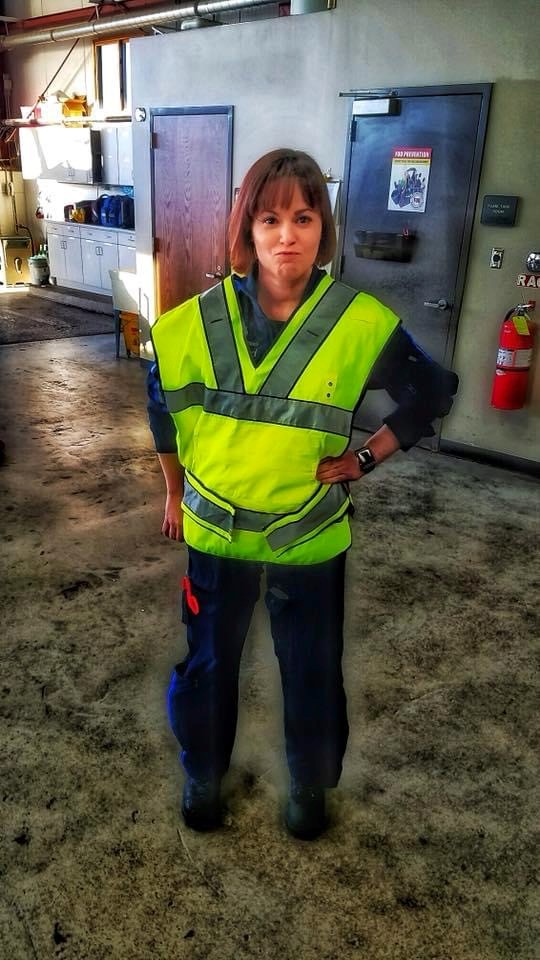
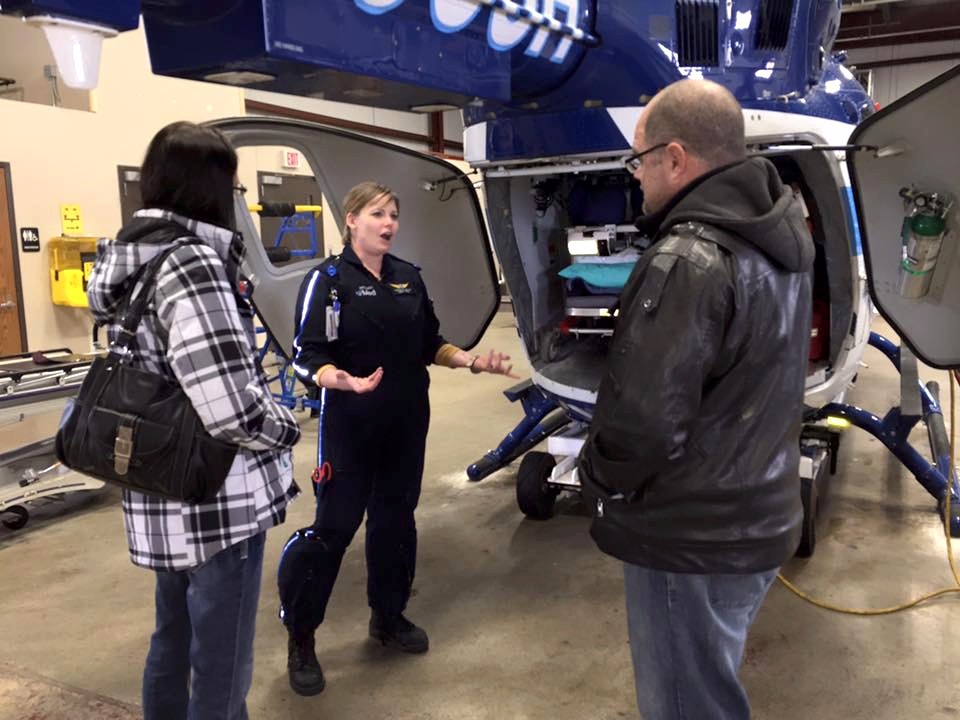
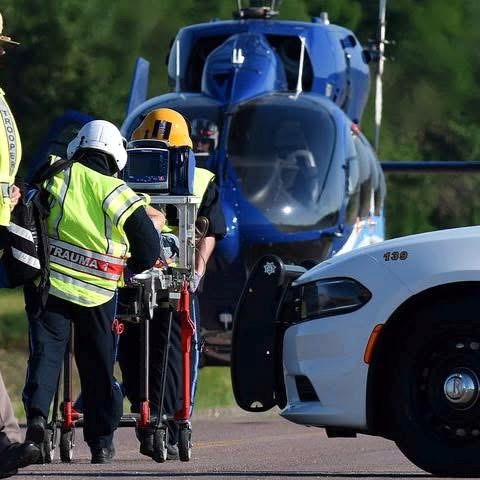
Nightingale OS was founded by a 20-year ER, Flight, and Trauma Nursing veteran who spent two decades running hospital trauma and accreditation programs, and twenty years of research and development into how hospitals actually operate — and who sat inside the surveys that decide designations, including two CDPH survey visits where her own performance was material to the plan of correction. Continuous survey readiness is not a category she read about. It is the work she did, on the days it counted. That is the moat, stated plainly: you cannot hire your way to this domain judgment — not the incumbents, not a well-funded copy, no one.
She is a primary contributing author across the Emergency Nurses Association’s trauma curricula — the Trauma Nursing Core Course provider manual (8th ed.), the ENA Advanced Course on Trauma, and the Emergency Nursing Core Curriculum (8th ed.) — the national courses emergency and trauma nurses train and certify through. A former Stanford educator, she taught herself to build by directing AI coding agents inside a governance harness she authored — the same discipline the product sells, applied to our own codebase first. The equity model follows the same logic: the profession that carries the accountability holds the ownership. Nurse-owned is a structural fact here, not a tagline.
Her work
The technical founder
There is no CTO yet, so judge the builder by what she has built. She taught herself to build by directing AI coding agents inside a governance harness she wrote, and she writes the cybersecurity analysis above.
Teaching, speaking and service
The national curricula
Author, Trauma Nursing Core Course 8th ed. (Musculoskeletal Trauma); Trauma Nursing Advanced Course (Tissue Perfusion, 2025); Emergency Nursing Core Curriculum 8th ed. (Chapter 28, 2026). Author of the Solheim Critical Care Transport certification review.
The conference stage
Faculty at the ENA’s national Emergency Nursing conference, 2016–2020; the Air Medical Transport Conference; Cornerstones in Emergency Nursing; the Oregon ENA; Totally Trauma; CritCareCon; and Stanford Health Care’s professional development series.
Service
Emergency Nurses Association Board of Directors, 2019–2021, where she approved the joint AAP, ACEP and ENA statement on pediatric patient safety (Pediatrics, 2022). Chair, ENA national conference education planning, 2018. Air Medical Journal editorial review board.
Honors
ENA 20 Under 40, 2022. Sanford Health Exemplary Professional Practice Award. Sanford AirMed Flight Team of the Month, twice. Distinguished Certified Pediatric Emergency Nurse. Hero of the Month, Sanford USD Medical Center.
Connect with her on LinkedIn · The full record on the company page
The Team
The forward-deployed engineer is the founder.
The pre-seed SAFE adds a CTO, a COO and a patient-safety lead. The gap we name ourselves: no technical co-founder today. The CTO is an open position, filled at close; fractional CTOs and a fractional COO, contracted at close, bridge it until the hires.
Kristen Cline, RN
Twenty years in ER, ICU, flight and trauma nursing; ran a trauma program; left Stanford to build this. Built the prototype. Active expert witness. Author, TNCC.
William Schueler
28 years in emergency nursing; 23 in patient safety. Leads patient safety and validates the data.
Luke Burton
Principal Software Engineer, NVIDIA Omniverse; 17 years at Apple. Related party, disclosed.
The Designation Economy
Our white paper on what hospital designations cost, earn and risk, built entirely from public sources: peer-reviewed studies, published fee schedules, federal purchase orders and CMS records. November 2026 edition.
The Digital Pilot
Charlie Owl run against a fully synthetic 274-bed hospital: what it finds, what closing the gaps would take, and how readiness drifts over ten weeks. Regenerated on current code, 10 November 2026.
Things can be better. Come see.
See Charlie Owl on synthetic data, and walk through what the Grace prototype will demonstrate.
Or email directly: kristen@nightingaleos.com